
Buying Land or a Rural Home in Yuba County (2026): Zoning, Permits, Utilities and Fire Insurance
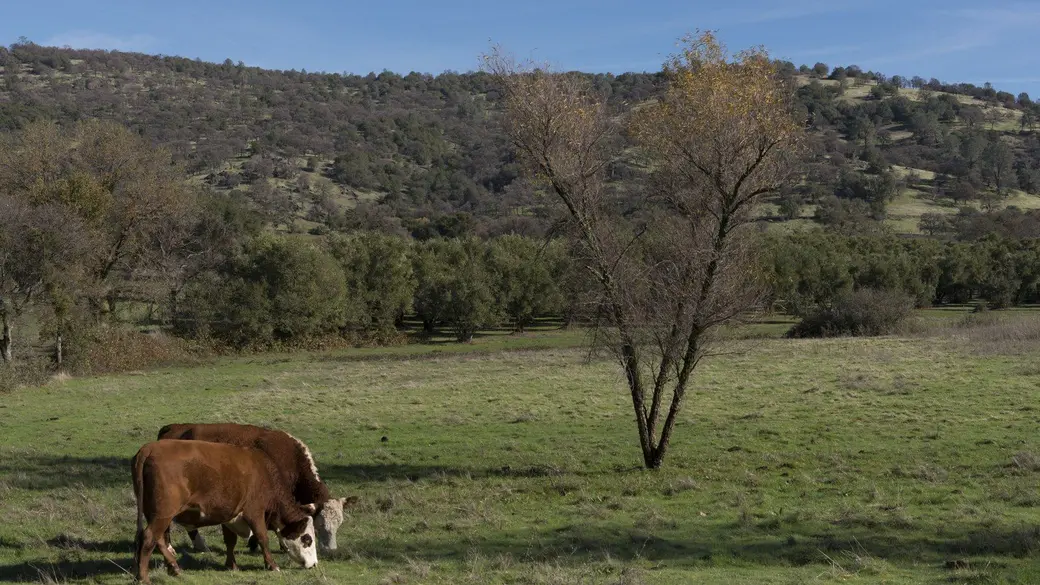
Dreaming of acreage in Browns Valley, Loma Rica, Smartsville or Oregon House? Rural Yuba County offers space, oak-covered hills and room for animals. But land comes with homework a city lot does not.
This guide answers the questions buyers ask me most: what the zoning allows, which permits you need to build, where water and sewer come from, what CAL FIRE’s fire-safe rules require, and what insurance looks like in the foothills. Every rule and number links to its source, mostly Yuba County’s own codes and handouts.
Key Takeaways: Buying Land in Yuba County, 2026
- Zoning sets your minimum lot size: Yuba County’s Agricultural/Rural Residential (AR) district comes in 5-, 10- and 20-acre minimums, and the Rural Residential (RR) district in 5 and 10 acres. Both allow one main home per parcel plus an accessory dwelling unit.
- No well, no house permit: since 2006, parcels that will use a domestic well must have the well drilled and the water tested before the county releases building permits for a home.
- Septic needs its own permit from Yuba County Environmental Health, with a site evaluation of the soil.
- Fire-safe rules apply to new building in the State Responsibility Area: a 12-foot driveway, turnouts and turnarounds on longer driveways, a 3,000-gallon fire water supply and 30-foot building setbacks from property lines.
- Insurance is a big part of the budget: California FAIR Plan policies in Browns Valley’s 95918 ZIP code rose from 48 in 2021 to 213 in 2025.
What Should I Check Before Buying Land in Yuba County?
Start with five questions. The answers decide whether you can build the home you want, and what it will cost.
- Zoning: what does the zone allow, and how small can a parcel be?
- Water: is there a well, or will you drill one? Is irrigation water available?
- Sewer: will the soil support a septic system?
- Fire safety and access: can the driveway, water supply and setbacks meet CAL FIRE’s rules?
- Insurance: can you get a quote you can live with before your contingencies end?
How Is Rural Land Zoned in Yuba County?
Most foothill acreage falls in an agricultural or rural community zone. The rules are in Division II of the Yuba County Development Code (Chapters 11.05 and 11.06). Here is how the main rural zones compare:
| Zone | Minimum lot size | Homes allowed | Typical setbacks (ft) |
|---|---|---|---|
| AR-5, AR-10, AR-20 (Agricultural/Rural Residential) | 5, 10 or 20 acres | 1 home per parcel, plus an ADU and junior ADU | Front 30, side 30 (lots 1 acre or more), rear 30 |
| AE-40, AE-80 (Exclusive Agricultural) | 40 or 80 acres | 1 home per parcel, plus an ADU and junior ADU | Front 30, side 30 (lots 1 acre or more), rear 30 |
| RR-5, RR-10 (Rural Residential) | 5 or 10 acres | 1 home per parcel, plus an ADU and junior ADU | Front 30, side 20 (lots 5 acres or more), rear 30 |
| RE (Residential Estate, outside the Valley Growth Boundary) | 1 acre | 1 home per parcel, plus an ADU and junior ADU | Front 30, side 10 to 20, rear 20 |
Source: Yuba County Development Code Tables 11.05.020, 11.05.030, 11.06.020 and 11.06.030. Approved ADUs do not count toward the one-home density limit. Homes can be up to 35 feet tall in these zones. In the rural community zones (RR and RE), parcels in a high fire severity zone need 30-foot setbacks from all property lines unless CAL FIRE clears a reduction in writing.
What Is the AR Zone For?
The county created AR for foothill parcels already split into pieces smaller than 20 acres. The code says these parcels are “predominantly utilized for very low density rural residential uses and small agricultural operations,” and it names specialty crops, boutique farming and agritourism as good fits.
Can I Split My Land Later?
Only if the parcels meet the zone’s minimum size and the county approves a parcel map. For example, a 10-acre parcel zoned AR-10 generally cannot become two 5-acre lots without a rezone or another approval the code allows. Some RE parcels in the Natural Resources area cannot be split at all. Check the zoning before you pay for “future lot split” potential.
Do I Need a Building Permit in Rural Yuba County?
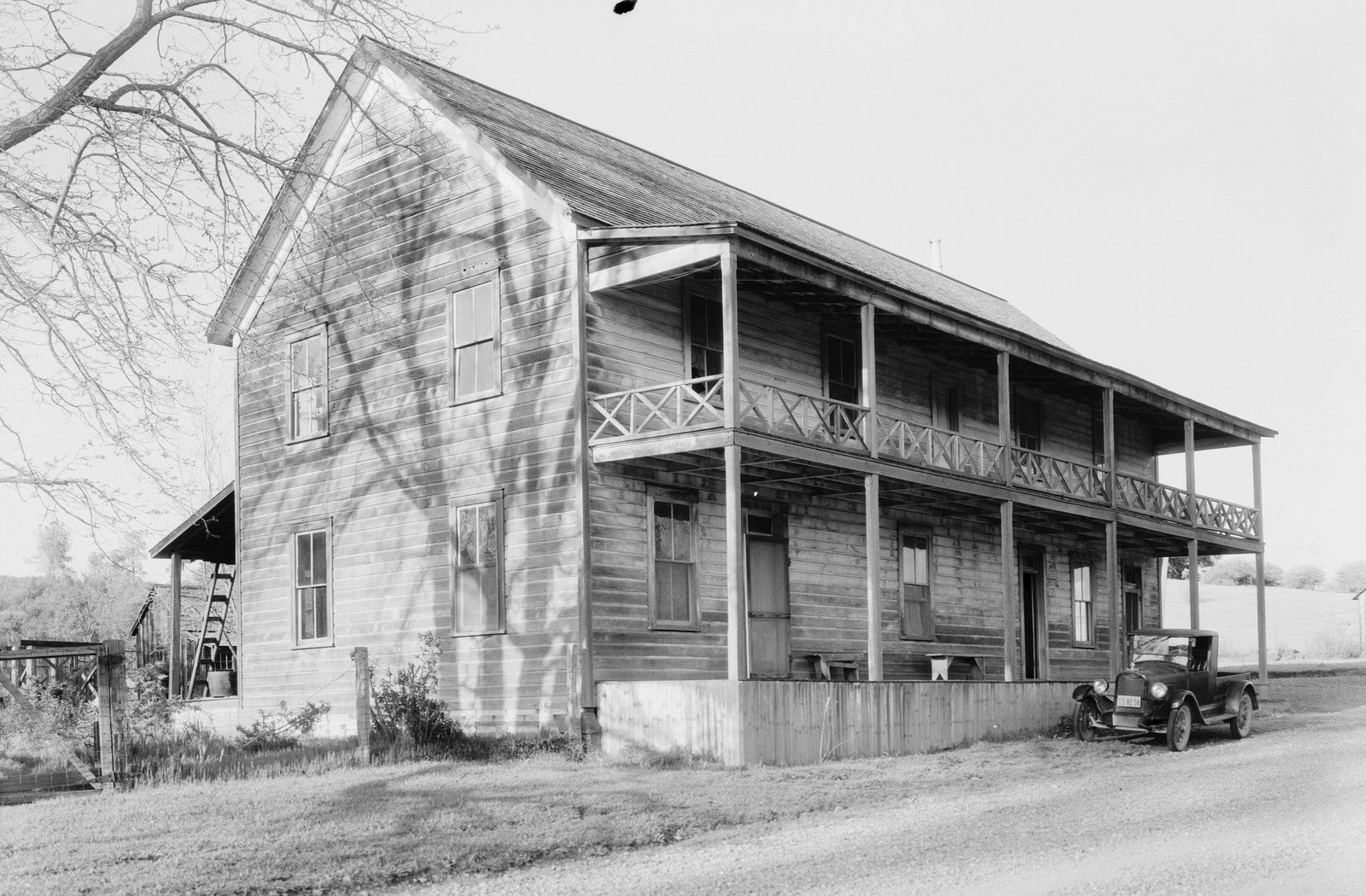
Yes. Under Yuba County Code section 10.05.400, anyone who builds, enlarges, alters, moves or demolishes a building, or installs or replaces regulated electrical, gas, mechanical or plumbing systems, must first get a permit from the Building Official. Owner-builder and contractor declarations are part of the application.
The Yuba County Building Department is at 915 8th Street, Suite 123, in Marysville. Before you close, ask the county or the seller for permit records on every building on the property, including shops, barns and added rooms.
What Comes First: the Well, the Septic or the House?
The well. On rural parcels the order usually runs like this:
- Check zoning and setbacks for where a home can sit.
- Drill and test the well and get the results reviewed by Environmental Health.
- Complete the septic site evaluation and get the septic permit.
- Plan the driveway, fire water supply and defensible space to meet the county’s fire-safe rules.
- Apply for the building permit.
What This Means If You Want to Buy
Rural land is a great value when it fits your plans. Make your offer protect you while you find out.
- Write in time for due diligence: zoning, a well test, a septic evaluation and an insurance quote.
- Ask for records: well completion reports, septic permits and building permits for every structure.
- Walk the driveway and picture a fire engine on it. Width, slope and turnarounds matter for new building.
- Get local help. Talk to me at 530-755-8479, or text me, and I’ll help you build a land checklist.
Where Does Water Come From on Rural Land?
Most rural homes use a private well. Yuba County Environmental Health permits every well, and its Private Water Systems program says that since 2006, “parcels that will get their drinking water from a domestic well are required to have a well drilled and the water tested prior to the release of building permits for habitable structures.” The county reviews the test results and may require treatment.
County code also requires a written permit to build, repair, deepen or destroy a well (section 7.03.050). Work must be done by a licensed well drilling contractor. For a deeper look at testing a well before you buy, see my well and septic buying guide.
Can I Use Irrigation District Water for My House?
Not for drinking. The Browns Valley Irrigation District serves the Browns Valley and Loma Rica areas, but it says it provides “raw, untreated agricultural water for irrigation use only,” not for drinking, bathing or cooking. Its irrigation season usually starts in late April and ends in October.
BVID was formed in 1888, covers more than 55,000 acres and serves more than 1,500 agricultural and domestic irrigation customers, according to Yuba Water Agency. If a parcel has BVID service, ask how many units it has and what the yearly charges are. Irrigation water can make pasture, gardens and orchards much easier.
How Does Septic Work on Yuba County Land?
Homes without public sewer use an onsite wastewater treatment system, or septic. Yuba County Environmental Health’s Sewage Disposal Program reviews and permits the construction, repair and maintenance of these systems. County code (Chapter 7.07, Article 2) requires a sewage disposal permit and a site evaluation, and soils studies for land use projects.
Soil, slope and groundwater decide what kind of system you can build. Some sites need an alternative or advanced system, which usually costs more and can require an annual operating permit from the county. On vacant land, ask whether a site evaluation has been done. On a home, ask for the septic permit and pumping records.
What Fire Rules Apply When You Build in the Foothills?
Yuba County’s fire-safe rules, in Chapter 11.22 of the Development Code, apply to new parcels, new construction and significant improvements in CAL FIRE’s State Responsibility Area (SRA). A significant improvement means, within three years, a 50% expansion of floor area or improvements valued at $25,000. The county’s Requirements for Rural Fire Protection handout sums up the main standards:
| Requirement | Standard |
|---|---|
| Driveway width | 12-foot traffic lane, with 15 feet of clearance from vegetation |
| Turnouts | Near the midpoint on driveways of 150 to 800 feet; every 400 feet on longer driveways |
| Turnaround | On driveways over 300 feet, within 50 feet of the building |
| Driveway slope | Up to 16% for gravel, 20% for paved |
| Gates | At least 14 feet wide and 30 feet back from the road, with a key box if locked |
| Fire water supply | At least 3,000 gallons on site before construction is complete |
| Building setback | 30 feet from all property lines or the center of a road |
| Defensible space | Lean, clean and green zone within 30 feet; reduced fuel zone out to 100 feet or the property line |
| Address sign | Reflective numbers at least 4 inches tall at the driveway entrance |
Existing permitted homes and existing driveways are generally exempt unless you make a significant improvement. Questions about alternatives go to CAL FIRE’s Nevada-Yuba-Placer Unit, Loma Rica/Dobbins Battalion.
How Do I Find a Property’s Fire Hazard Severity Zone?
Look it up on CAL FIRE’s Fire Hazard Severity Zone maps. The State Responsibility Area maps took effect April 1, 2024, and maps for Local Responsibility Areas were released to counties and cities in early 2025. Sellers must also tell you if a home is in a very high fire hazard severity zone on the Natural Hazard Disclosure.
Can I Get Fire Insurance on a Rural Home in Yuba County?
Usually yes, but plan ahead. Many foothill owners now use the California FAIR Plan, the state’s insurer of last resort for property owners who cannot find coverage in the regular market (California Department of Insurance). The FAIR Plan’s own ZIP code data shows how fast that has grown in Yuba County’s foothills.
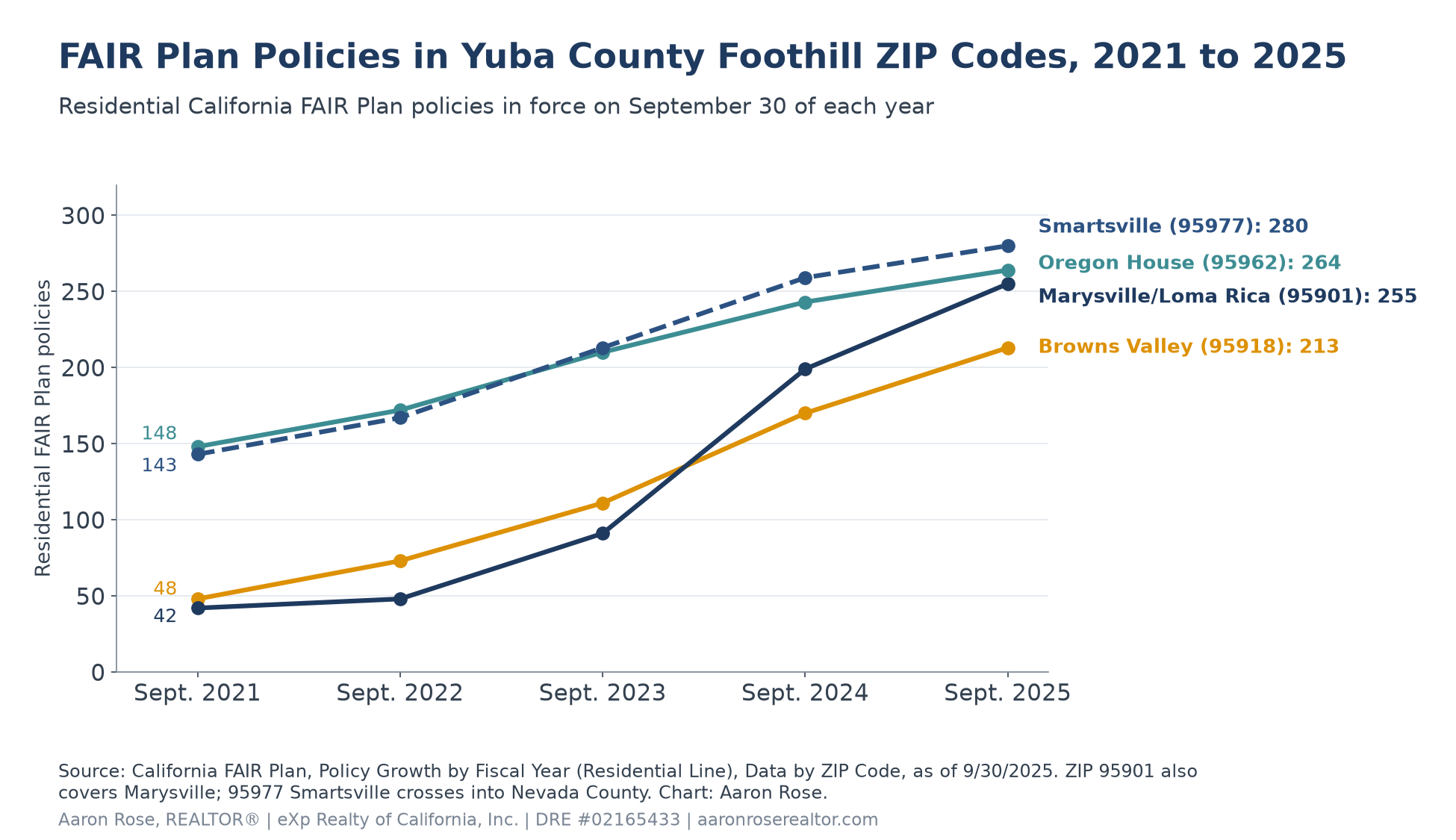
| ZIP code (area) | 2021 | 2022 | 2023 | 2024 | 2025 | Change, 2021–2025 |
|---|---|---|---|---|---|---|
| 95918 (Browns Valley) | 48 | 73 | 111 | 170 | 213 | +344% |
| 95901 (Marysville and Loma Rica) | 42 | 48 | 91 | 199 | 255 | +507% |
| 95962 (Oregon House) | 148 | 172 | 210 | 243 | 264 | +78% |
| 95977 (Smartsville) | 143 | 167 | 213 | 259 | 280 | +96% |
| 95919 (Brownsville) | 184 | 206 | 225 | 258 | 257 | +40% |
| 95935 (Dobbins) | 99 | 119 | 141 | 165 | 172 | +74% |
Source: California FAIR Plan ZIP code report linked above. ZIP 95901 also includes the city of Marysville, and 95977 crosses into Nevada County.
What Should Buyers Know About the FAIR Plan?
- It is basic fire coverage. Many owners pair it with a difference in conditions policy for liability, theft and water damage.
- Rates went up this fall. FAIR Plan rates rose an average of 29.1% for new and renewal policies starting October 15, 2026 (KQED).
- Mitigation can help. California’s Safer from Wildfires program requires insurers to offer discounts for steps like a Class A roof, ember-resistant vents and cleared defensible space.
- Get quotes early. Lenders require insurance before closing, so ask for quotes in the first days of escrow.
What This Means If You Want to Buy
A clear plan for zoning, water, septic, fire rules and insurance turns a risky land deal into a smart one.
- Confirm the zone and its minimum lot size before you count on building, adding an ADU or splitting.
- Test before you trust: well flow and water quality, plus a septic inspection or site evaluation.
- Budget for fire-safe work like a driveway upgrade, turnarounds and a 3,000-gallon water tank on vacant land.
- Explore the area in my Browns Valley, Loma Rica, Smartsville and Oregon House neighborhood guides.
FAQ: Buying Land in Yuba County
What is the minimum lot size for rural land in Yuba County?
It depends on the zone. Agricultural/Rural Residential parcels have 5-, 10- or 20-acre minimums (AR-5, AR-10, AR-20), Rural Residential has 5 or 10 acres, and Exclusive Agricultural has 40 or 80 acres.
Can I build an ADU on rural land in Yuba County?
Yes, in most rural zones. Yuba County’s Development Code permits an accessory dwelling unit and a junior ADU in the AE, AR, RR and RE zones, and approved ADUs do not count toward the one-home-per-parcel limit.
Do I need a well before I can get a building permit in Yuba County?
Yes, if the home will use a domestic well. Since 2006, Yuba County Environmental Health has required the well to be drilled and the water tested before building permits are released for habitable structures.
Do I need a permit for a septic system in Yuba County?
Yes. Yuba County Environmental Health permits the construction, repair and maintenance of septic systems, and county code requires a sewage disposal permit and a site evaluation.
Can I drink Browns Valley Irrigation District water?
No. BVID provides raw, untreated agricultural water for irrigation only, not for drinking, bathing or cooking, so homes in its area still need a well or another potable water source.
What fire rules apply to building a home in rural Yuba County?
New construction in the State Responsibility Area must meet the county’s fire-safe rules. These include a 12-foot driveway with turnouts and turnarounds, a 3,000-gallon fire water supply, a 30-foot building setback from property lines and defensible space up to 100 feet.
How do I find out if a property is in a fire hazard severity zone?
Check CAL FIRE’s Fire Hazard Severity Zone maps online. The seller’s Natural Hazard Disclosure also tells you whether the property is in a very high fire hazard severity zone.
Is it hard to get homeowners insurance in the Yuba County foothills?
It can be. FAIR Plan policies in Browns Valley’s 95918 ZIP code rose from 48 in 2021 to 213 in 2025, so get insurance quotes early in escrow and ask about wildfire mitigation discounts.
Sources
- Yuba County Development Code, Division II: Zoning and Overlay Districts (2025)
- Yuba County Development Code, Division III (Chapter 11.22, Fire Safe Regulations) (2025)
- Yuba County Building Department: Requirements for Rural Fire Protection (handout)
- Yuba County Code section 10.05.400: Permits required
- Yuba County Building Department
- Yuba County Environmental Health: Private Water Systems (wells and soil borings)
- Yuba County Code section 7.03.050: Well permit required
- Yuba County Environmental Health: Sewage Disposal Program
- Yuba County Code Chapter 7.07, Article 2: Sewage disposal general requirements
- CAL FIRE Office of the State Fire Marshal: Fire Hazard Severity Zones
- California Civil Code 1103.2 (Natural Hazard Disclosure Statement)
- Browns Valley Irrigation District: Frequently Asked Questions
- Yuba Water Agency: Partnering Irrigation Districts
- California Department of Insurance: California FAIR Plan
- California Department of Insurance: Safer from Wildfires
- California FAIR Plan: Policy Growth by Fiscal Year, Residential, by ZIP Code (as of September 30, 2025)
- KQED: California FAIR Plan Announces 29.1% Rate Hike for Homeowners This Fall (August 2026)
Last updated October 26, 2026 by Aaron Rose, REALTOR®, DRE #02165433, eXp Realty of California, Inc. (broker DRE #01878277). Equal Housing Opportunity. This article is general information, not legal, insurance or engineering advice. Zoning, permit and fire-safe rules change; confirm current requirements for a specific parcel with Yuba County Planning, the Building Department, Environmental Health and CAL FIRE before you buy or build.
Ready to talk through your next step?
Whether you want a few acres for horses, a homestead or simply room to breathe, a clear plan for zoning, water and fire safety helps you buy the right piece of Yuba County.
Recent Posts
GET MORE INFORMATION

Agent License ID: 02165433